

First picture I took of the comet, on July 10th, 2020 at around 4:20 in the morning. It was fainter than this by the naked eye but still could be spotted by it. 55mm lens at f/5.6 for 0.62 seconds at ISO 3200.
A comet is making a show, so here’s some pictures I’ve taken of it!
Comet NEOWISE was discovered by NASA’s NEOWISE satellite on Marth 27th of this year (thus the name) and was designated C/2020 F3 (C for comet, 2020 for the year, F for it being the second half of March [A being the first half of January, B the second half of January, C being the first half of February and so on] and 3 being the third comet discovered in that second half of March – as explained here; what an odd naming scheme). Then it swung around the sun and got visible. I’ve read from the July issue of Sky & Telescope magazine that most comets are duds – they’re rarely visible if they don’t break apart when they approach the sun, so seeing one is exciting! Also that article was unexpectedly aptly timed!
My first attempt to take pictures of it was on the morning of July 10th, at around 4 am. The image above is similar to how it appeared to the naked eye, a very faint smudge. These pictures are as-is from the camera; I didn’t bother editing them (past cropping and resizing that is):

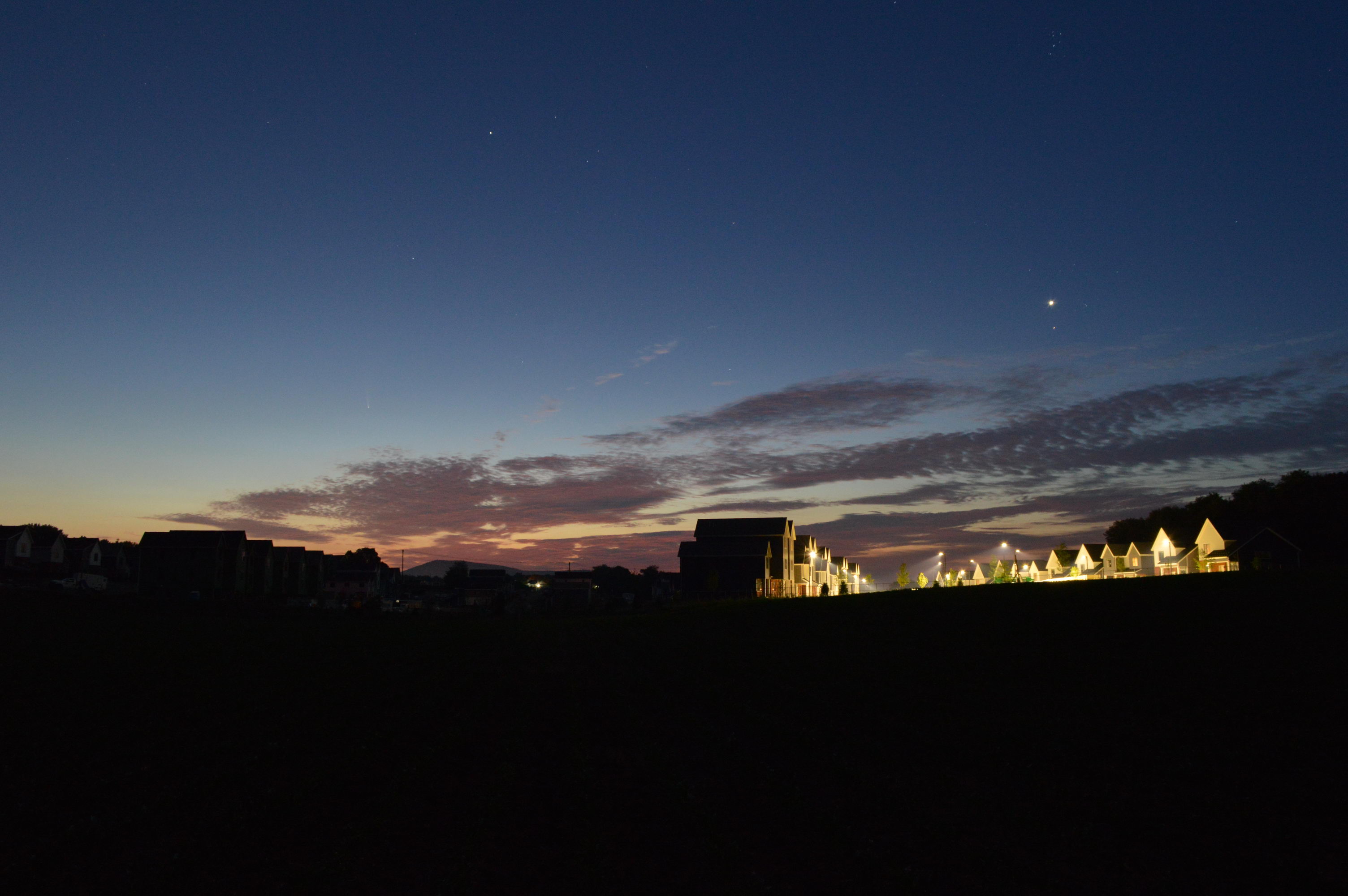
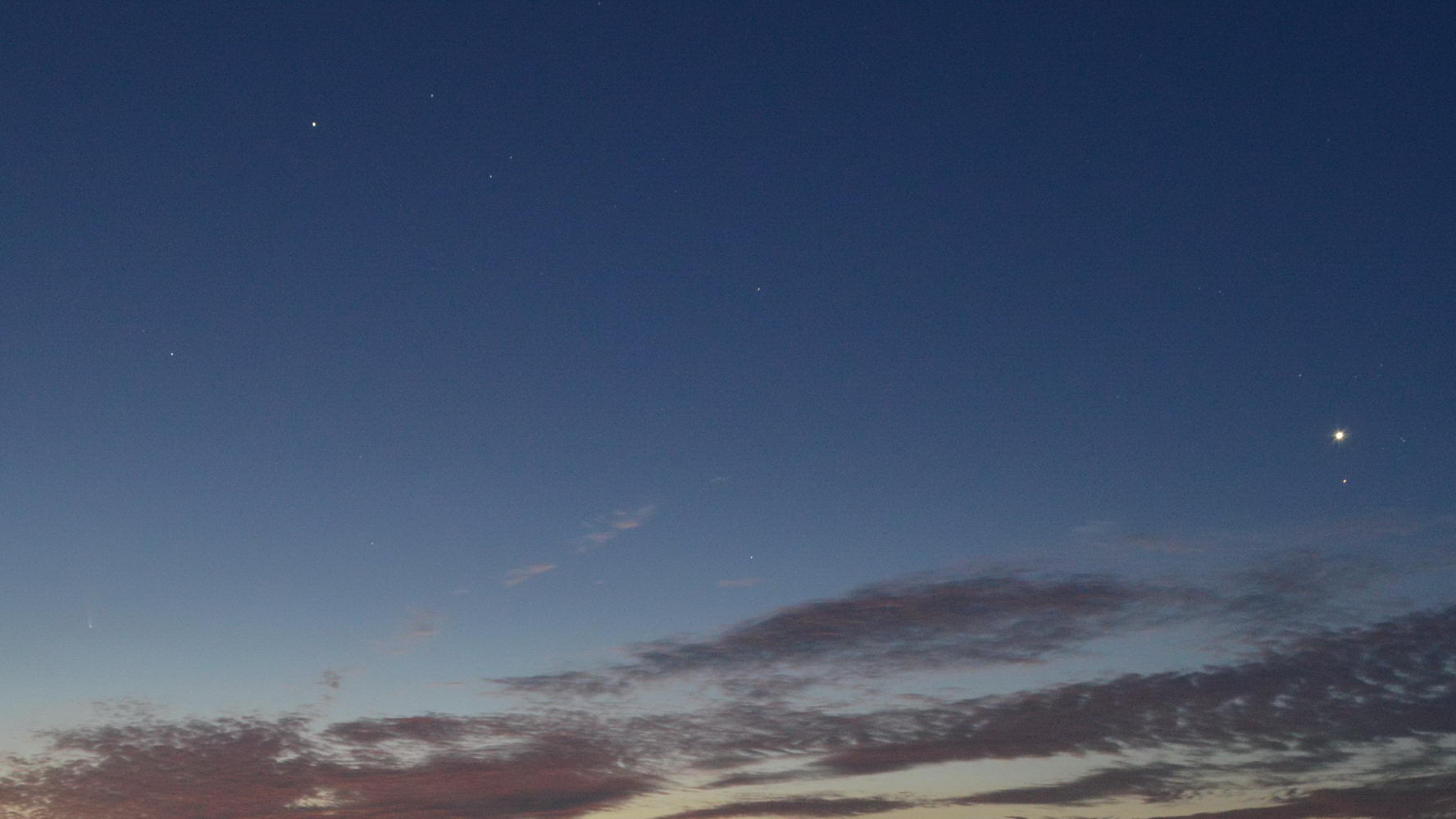
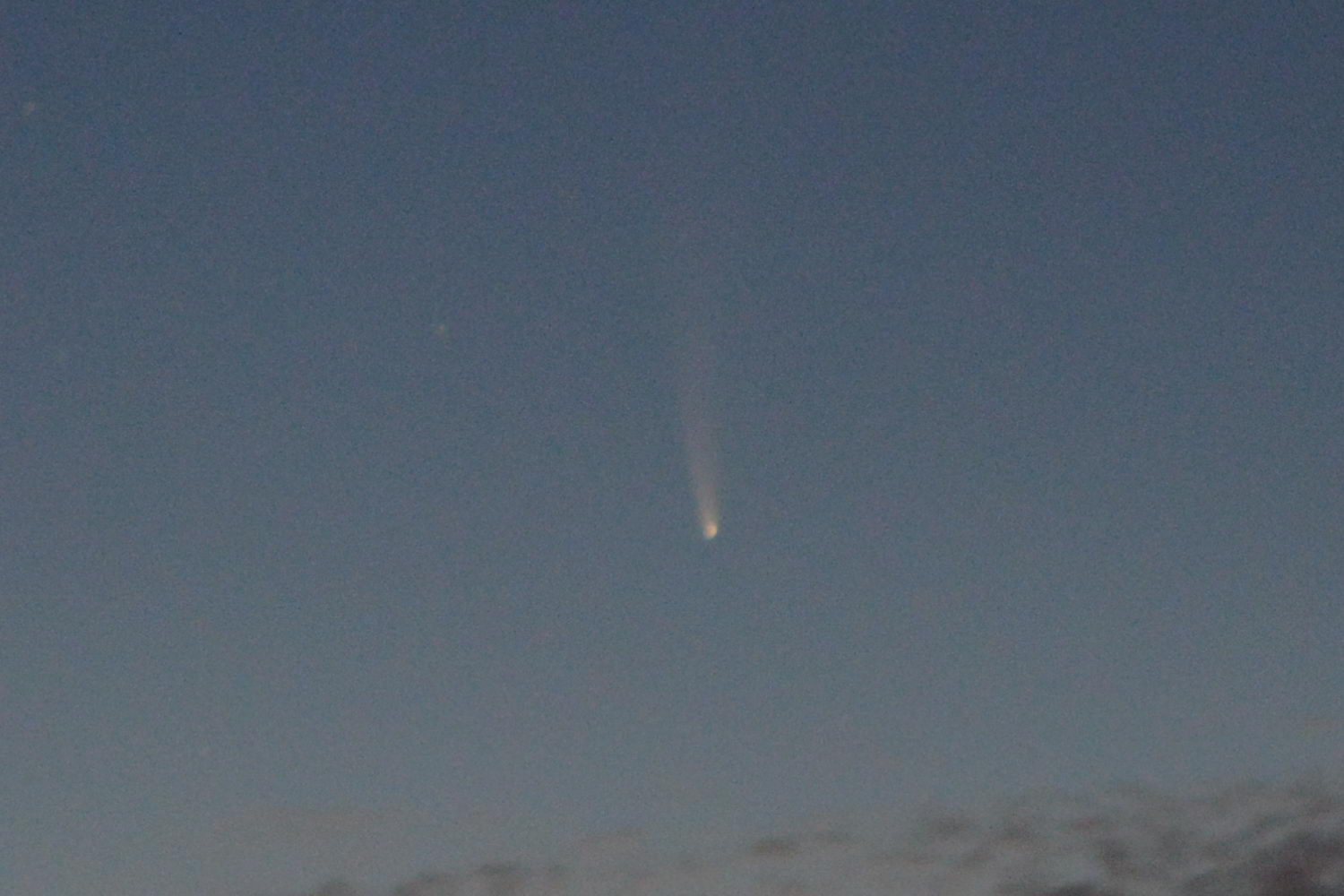
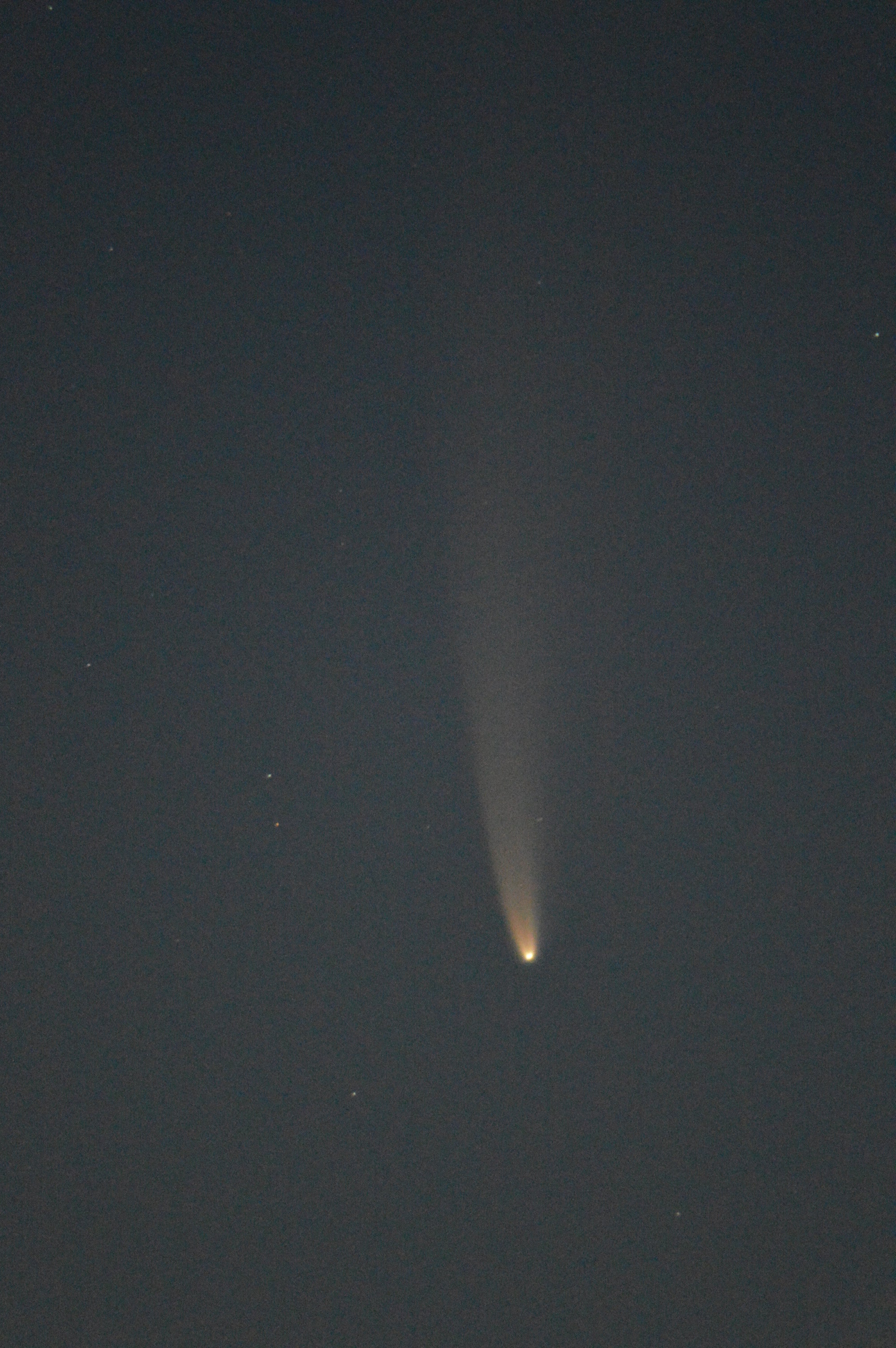
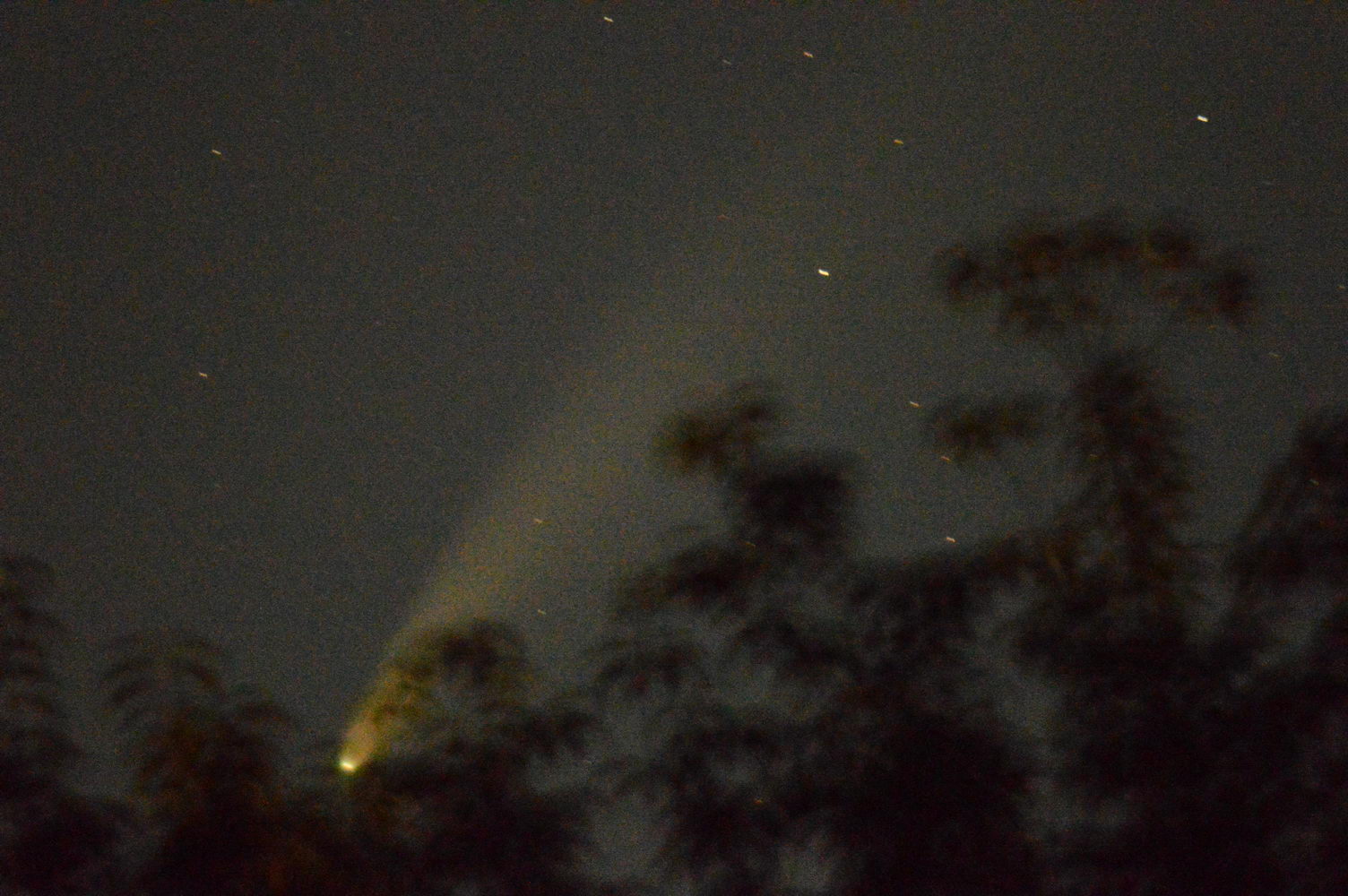
It looks red in most of the images as it is low on the horizon.
Second time I took pictures was around 10 pm on July 14th; this time I set up the camera to take 20 shots at 2 seconds each, then I attempted to align and stack them (having never done this before).

One of the 20 images taken in sequence for stacking. All were taken with the 500mm lens, f/6.3, ISO 6400 for 2 seconds
I used Hugin to align the images, following these instructions (instead of the more involved method shown in Sky & Telescope). Control points were created with the ‘Align image stack’ setting, with optimizing those points with the ‘Positions (y,p,r)’ setting. Panorama output was ‘Exposure fused from stacks’, and for each individual image (the ‘Remapped Images’), they were one of the low dynamic range ones. The panorama output was Hugin fusing them all together (stacking them) which gave me this image:

I also tried taking the aligned individual images and stacking them in GIMP. I opened them all as layers (File > Open as layers…), then in the layers window (Ctrl + L if it’s not open), I switched the mode to addition, then exported the image, which gave me this image:
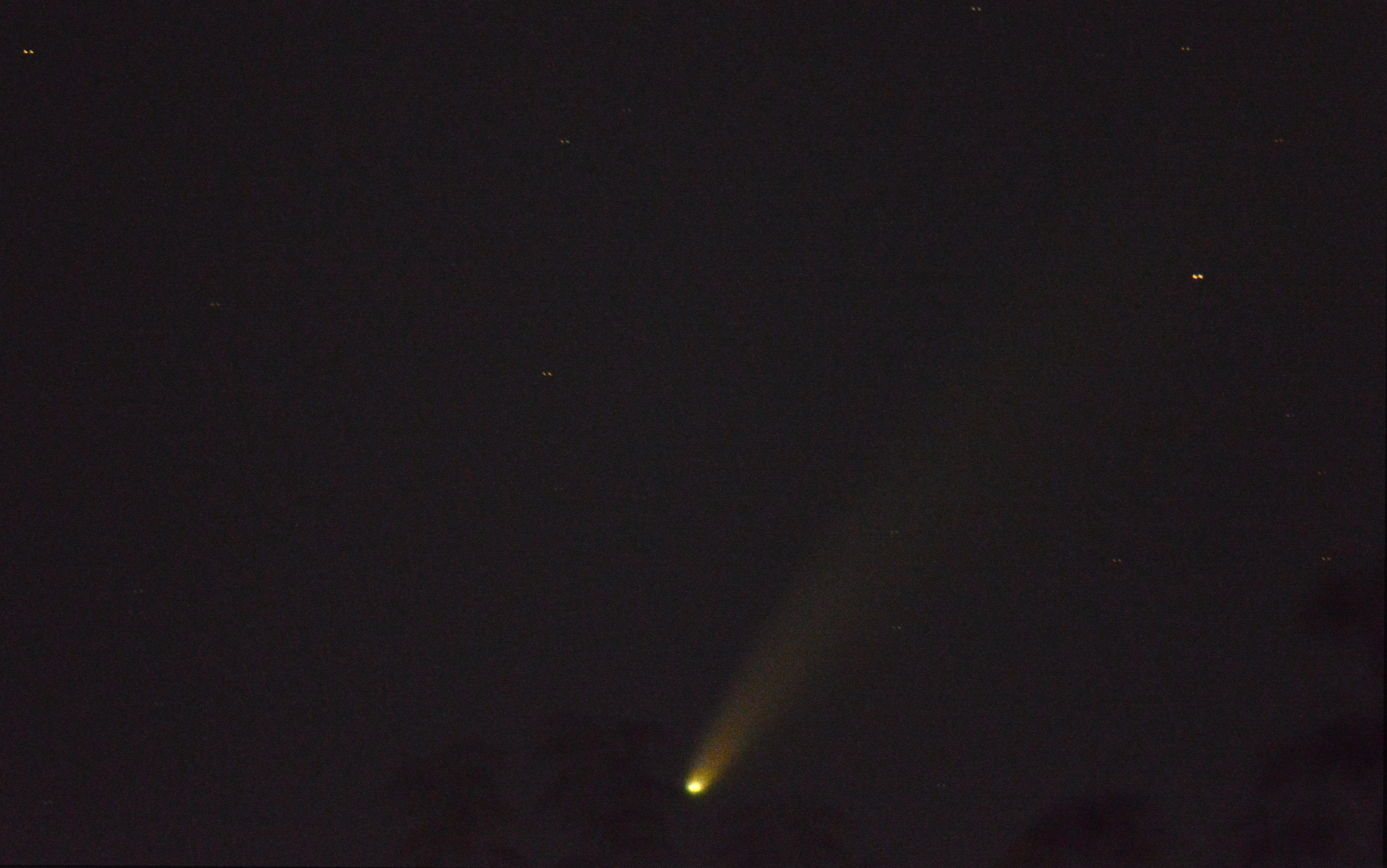
You can see the alignment is mostly there, but with the doubled stars it isn’t quite exact – I don’t have enough reference points in the images for hugin to align more exactly. Other people who have far more expensive equipment will have better shots but hey, I found it neat to do!
The comet should be visible for the next few days (after July, it’s unlikely to be easily viewed, and won’t be seen again for another some 6000 years), so go out and take a look!
Other links:
https://en.wikipedia.org/wiki/C/2020_F3_(NEOWISE)
https://earthsky.org/space/how-to-see-comet-c2020-f3-neowise
https://skyandtelescope.org/press-releases/new-bright-visitor-comet-neowise/
 Orthallelous
Leave a comment